
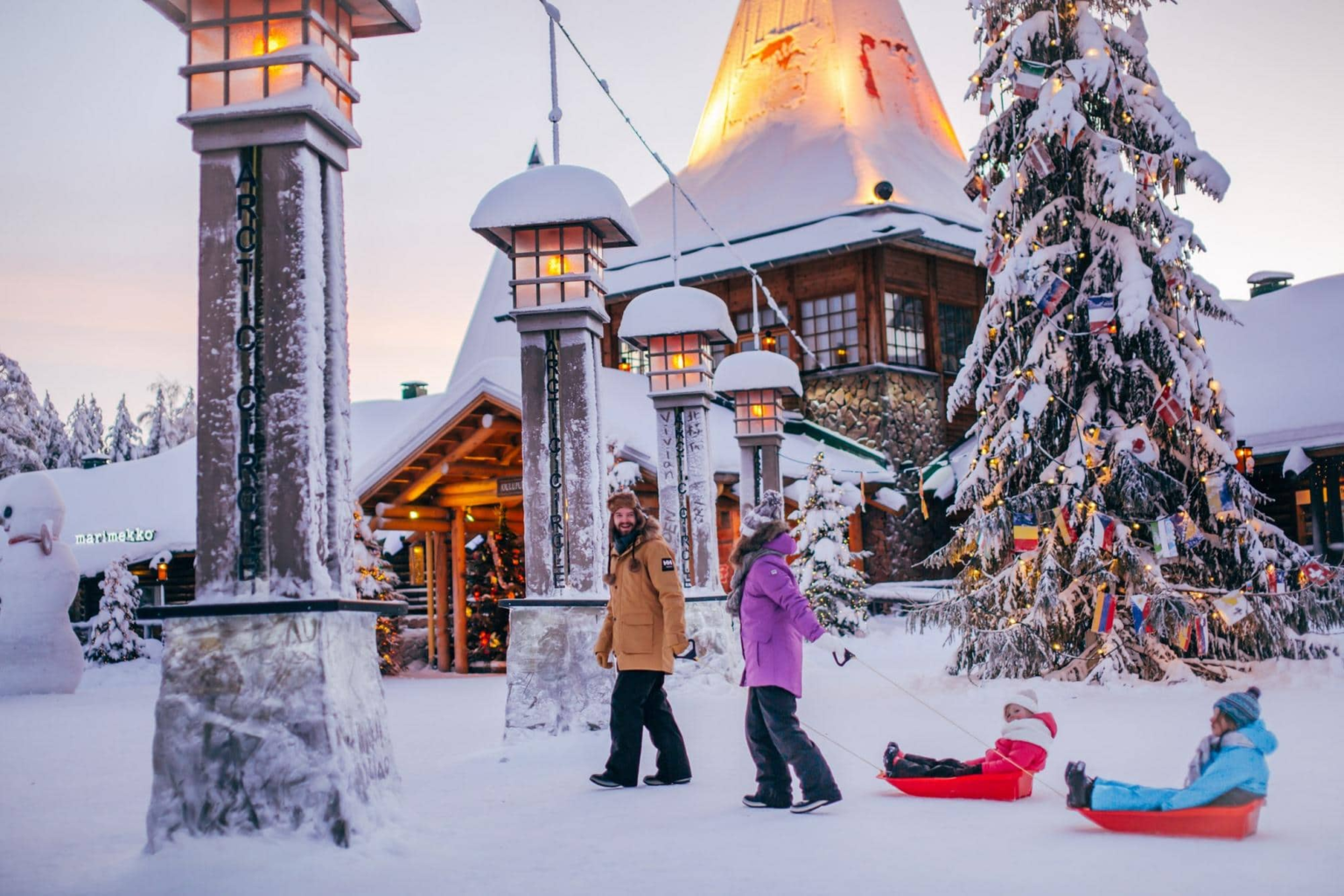

The concept of Christmas is traditionally bound to a specific season. For most of the year, the festive cheer, twinkling lights, and universal warmth of the holidays remain packed away in boxes, waiting for the winter solstice to return. However, across North America, there are special enclaves where the spirit of December never fades, regardless of what the calendar says. These magical places, known collectively and individually as Santa’s Village, have provided generations of families with a sanctuary of pure nostalgia, innocent wonder, and year-round holiday joy. From the historic mid-century parks that pioneered the modern theme park industry to the surviving wonderlands operating today, these villages represent a brilliant combination of cultural folklore and family entertainment.
Understanding the phenomenon of Santa’s Village requires a journey through time, a look at how amusement trends evolved, and an exploration of the unique locations that keep the magic alive. It is an exploration of sensory delights, architectural whimsy, and the enduring human desire to step into a fairy tale where the host is none other than Father Christmas himself.
The Mid-Century Birth of Festive Franchise Parks
To appreciate the legacy of Santa’s Village, one must look back to the early 1950s, a period when the United States was experiencing a massive post-war baby boom. Parents were looking for wholesome, imaginative entertainment for their children, and highway systems were expanding, making road trips a staple of American family life. A visionary developer named Glenn Holland looked at this landscape and realized that a permanent home for Santa Claus could be the ultimate family destination.
Interestingly, the very first Santa’s Village opened its gates in Skyforest, near Lake Arrowhead in California, on Memorial Day weekend in 1955. This was remarkably six weeks before Walt Disney opened Disneyland, making Santa’s Village one of the absolute pioneers of the fully themed, conceptual amusement park. Holland’s creation was not just a collection of random roller coasters; it was an immersive environment. Visitors stepped into a 230-acre natural forest filled with real log cabins featuring exaggerated, pointed roofs, gingerbread trim, and bright, surreal colors that looked as though they had been pulled straight from a storybook.
The success of the Skyforest location sparked what became the world’s first franchised amusement park chain. Holland quickly expanded, opening a second location in Scotts Valley, California, in 1957, and a third in East Dundee, Illinois, in 1959. For decades, these parks captured the imaginations of millions of children who got to ride a miniature bobsled, hop on a whimsical monorail, and visit a real petting zoo filled with Santa’s reindeer. Though the changing landscape of massive, thrill-seeking theme parks eventually forced the closure of some original sites, the blueprint they established for intimate, child-centric holiday immersion remains legendary.
The New England Gem that Perfected the Formula
While the West Coast and Midwest pioneered the franchise model, a completely independent version of Santa’s Village was quietly perfecting the concept in the northeast. Tucked away in the majestic White Mountains of Jefferson, New Hampshire, another Santa’s Village opened its gates in June of 1953. Created by the local Sanborn family, this park did not rely on a corporate expansion model. Instead, it grew organically, deeply rooted in the natural beauty of New England and managed with a personal touch that persists to this day.
The Jefferson location has become widely recognized as a gold standard for family-focused theme parks, frequently ranking as a top amusement destination in New England. What makes this particular village so successful is its brilliant balance of old-world charm and modern park amenities. The park features over twenty rides, almost all of which are cleverly themed around winter, reindeer, or Christmas lore. Visitors can soar above the trees on the Skyway Sleigh, brave the splashes of the Yule Log Flume, or experience family thrills on coasters like Rudy’s Rapid Transit and the Midnight Flyer.
Beyond the mechanical rides, the New Hampshire park focuses heavily on interactive traditions. Children participate in the Elfabet game, searching every corner of the park to find hidden elf characters and stamp their specialized cards. The air is permanently filled with the scent of fresh gingerbread cookies, which children can decorate themselves at the local bakery. Because it remains independently owned and operated by generations of the same family, the park maintains an authentic, non-commercialized warmth that feels like a genuine trip to the North Pole.
The Modern Rebirth and Adventure Parks
As the twentieth century transitioned into the twenty-first, the antique structures of the original parks faced a critical crossroads. Consumer tastes were shifting toward extreme roller coasters, and many historic roadside attractions began to fade into memory. The original California Santa’s Village in Skyforest closed its doors in 1998, leaving behind a ghost town of decaying candy cane signposts along the Rim of the World Highway. For nearly two decades, nostalgic fans mourned the loss of their childhood haven.
However, the story of Santa’s Village is one of resilience. In 2014, new owners acquired the historic Skyforest property with an ambitious vision to reinvent the space for a new generation while respecting its deep historical roots. In 2016, the park reopened as SkyPark at Santa’s Village. Instead of relying solely on mechanical kiddie rides, the new park transformed the 230 acres into an outdoor adventure destination.
Today, the historic log cabins are fully restored, but they are surrounded by world-class mountain biking trails, hiking paths, fly-fishing ponds, ziplining courses, and archery ranges. During the winter, the meadowlands transform into an open-air ice-skating rink. This evolution proved that the underlying magic of a mountain-bound Christmas village could successfully merge with active, health-conscious modern lifestyles. Similarly, the East Dundee, Illinois location found a second life, evolving into a hybrid amusement park and zoo, ensuring that midwestern families still have a place to celebrate the holiday spirit.
Sensory Delights and the Architecture of Whimsy
One of the most profound aspects of visiting any Santa’s Village is the immediate, overwhelming sensory shift that occurs the moment you cross the threshold. The real world seems to drop away, replaced by an environment specifically engineered to evoke joy, safety, and wonder. The architecture plays a massive role in this psychological transformation. The buildings intentionally reject rigid, industrial modern lines in favor of organic shapes, heavily sloped roofs designed to hold imaginary snow, and vibrant pastel or primary color schemes.
The auditory landscape is equally intentional. Soft holiday music filters through the trees, creating a rhythmic backdrop to the laughter of children and the chiming bells of miniature trains. Even the environmental temperature often cooperates, as many of these parks are situated in mountainous, forested regions where the air feels crisp and clean, even in the height of July.
Then, there is the sense of taste and smell. A trip to these villages is incomplete without the culinary traditions that define the experience. Huge copper kettles bubble with fresh fudge, roaring fire pits invite families to roast s’mores together, and hot cocoa is served in souvenir mugs even when the sun is shining brightly overhead. These sensory triggers work together to create a powerful psychological anchor, linking childhood memories with physical sensations that visitors carry with them long into adulthood.
The Enduring Appeal of Direct Encounters with Folklore
At the center of every single version of Santa’s Village is a simple, profound human interaction: a child meeting Santa Claus. In a world increasingly dominated by digital screens, virtual reality, and artificial entertainment, the opportunity to sit down in a beautifully appointed log cabin and speak face-to-face with a living symbol of generosity remains incredibly powerful.
The actors who portray Santa and his elves in these parks are far more than seasonal employees; they are the keepers of a sacred cultural tradition. They take the time to listen to every child, reinforcing values of kindness, wonder, and hope. This direct connection to folklore allows children to extend their sense of magic for just a little bit longer. For parents, watching their children experience this unironic joy provides a rare, emotional respite from the stresses of modern adult life, making the village a sanctuary for the old just as much as it is a playground for the young.
Conclusion
Santa’s Village is far more than a collection of amusement parks or a clever marketing gimmick designed to capitalize on holiday nostalgia. It is an enduring piece of cultural Americana and Canadian heritage that satisfies a fundamental human need for joy, wonder, and familial connection. By creating physical spaces where the finest aspects of the Christmas spirit—generosity, innocence, warmth, and community—are sustained throughout the entire year, these villages provide a timeless escape from the rapid pace of the modern world. Whether through the rugged mountain biking trails of California’s reinvented SkyPark, the traditional family rides of New Hampshire’s historic destination, or the cherished memories of the vintage franchise locations, Santa’s Village remains a beautiful reminder that the magic of Christmas does not belong to a single day on the calendar, but rather to a state of mind that can be visited whenever we need it most.